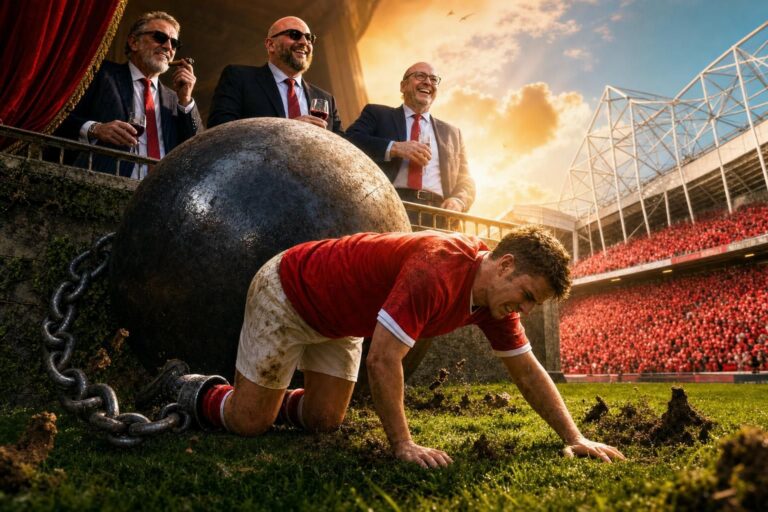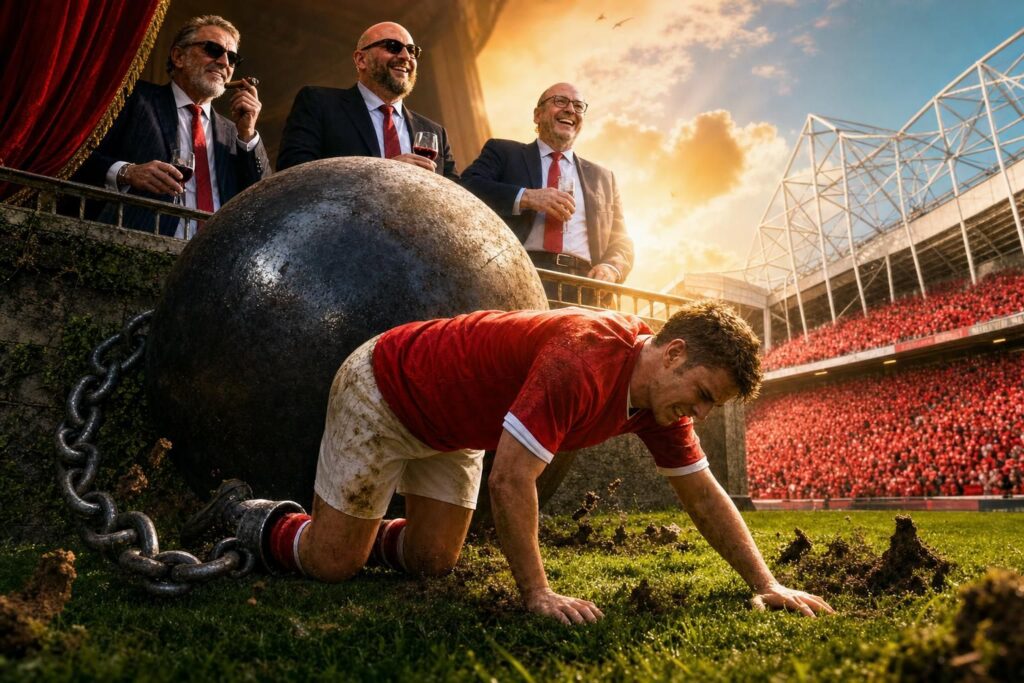
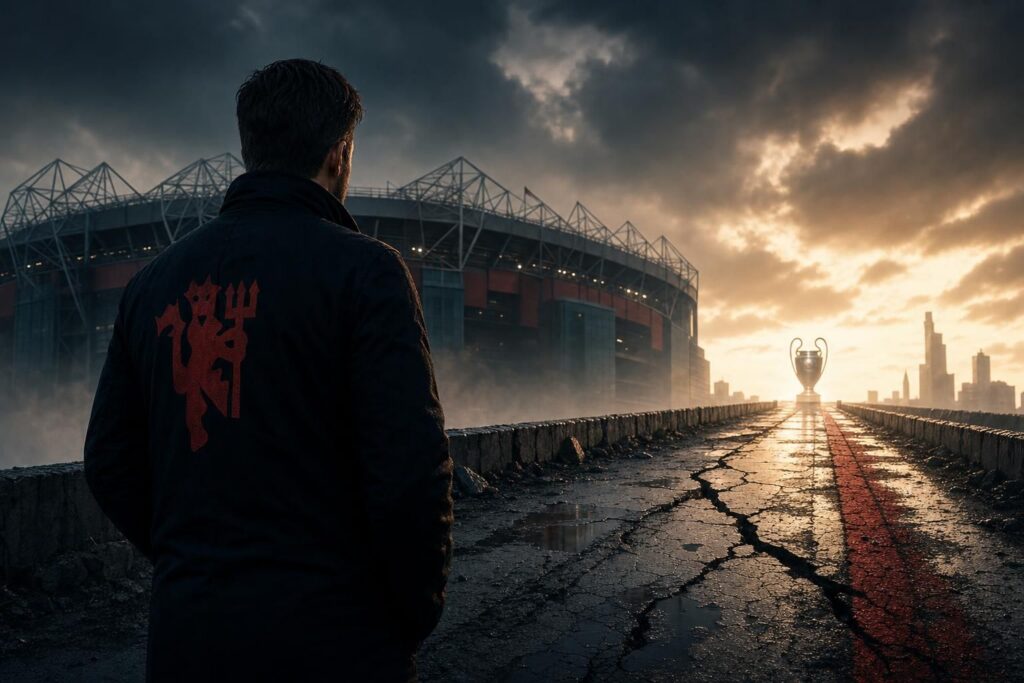
Manchester United’s realistic Champions League success means group stage qualification, not trophy ambitions, as financial need and squad rebuild severely limit genuine competitive capability.
The betting markets have spoken. According to some operators, Manchester United are the eighth-favourite to win the Champions League this season. Never mind that United have won one of their last nine European games. Never mind that their last knockout appearance was nearly a decade ago. Never mind that their squad is still mid-rebuild. The bookmakers have made a decision based on a combination of historical prestige, betting volume and the simple fact that nobody really knows what else to do with a club of United’s apparent stature.
It’s nonsense, obviously. But it’s also oddly revealing about the position United occupy right now: a genuinely significant club in a genuinely precarious situation, where the gap between what the world expects and what’s actually achievable is wider than it has been in two decades.
Michael Carrick has spent the last few weeks carefully, diplomatically, trying to manage that gap. “We understand the reality of what we feel we can achieve,” he said. Translated from managerial-speak, that means: “Please don’t expect us to win Europe.”
United’s return to the Champions League, after nearly three years away, matters far more than the cosmetic details suggest. This isn’t simply about sporting achievement, though that matters too. This is about survival: financial, structural, competitive.
The Financial Desperation
Manchester United have a serious money problem. Not insolvency. Not crisis. But a genuine, structural cashflow issue that has become impossible to ignore.
The summer transfer window revealed the limits. Three midfielders arrived for around £85 million net spend. That’s not nothing, but it’s the recruitment strategy of a club working within constraints. The glaring defensive weakness that leaked six goals in three Premier League games went unaddressed because United couldn’t justify the spend.
Why? Because a club of United’s size should be generating more European revenue than currently materialises. Arsenal reached the Champions League final last season and banked over £120 million. Manchester City, despite a disappointing European campaign, still earned more than £80 million by reaching the last 16. United, meanwhile, have spent two of the last three seasons in the Europa League or entirely absent from European football.
Those missing seasons have created a deficit. The absence of consistent Champions League group-stage revenue limits squad investment. The ownership model takes money out rather than putting it in. Recent recruitment mistakes have drained resources. A new stadium remains years away. The mathematics are ugly.
This is why the Champions League isn’t a luxury for United. It’s a necessity. Regular qualification would increase the scope to invest, narrow the gap to Arsenal, City, Bayern Munich and the continental elite, and begin solving the structural problem.
For Carrick and the board, that financial context frames everything this season. This isn’t about winning trophies. It’s about unlocking cashflow.
The Fixture Congestion Reality
Playing in the Champions League this season creates an immediate problem that nobody’s discussing enough: fixture congestion at a moment when the squad is demonstrably thin.
United begin with four games in 11 days, including the Manchester derby against City. That’s just the opening sequence. The expanded Champions League format means more group-stage matches spread across a condensed schedule. Playing three games a week will strain a squad still undertaking a rebuild.
Carrick acknowledged this honestly in summer: “There’s no denying it’s different.” Different is diplomatic language for: this is going to be difficult.
The deeper problem is the squad architecture. United have invested in midfield (Santos, Tielemans, Baleba) but the defensive line remains porous. The recent Everton draw, where United conceded twice more in a performance lacking basic solidity, illustrated the vulnerability. European football punishes that kind of structural weakness mercilessly.
European nights also demand a different mentality and approach. The intensity varies. The tactical demands shift. The defensive discipline required is unforgiving. United’s squad hasn’t experienced this collectively for three years. The rhythm, the pressure, the accumulated physical and psychological demand of playing twice a week across 11 months: these are not trivial complications.
Add this to the list of complications facing Carrick: rebuild the squad, improve the Premier League position, navigate fixture congestion, and somehow also perform credibly in a competition featuring Bayern Munich, Barcelona, Real Madrid, Arsenal and Paris Saint-Germain.
What Realistic Success Actually Means
Internally, United have established quiet benchmarks for what would represent meaningful progress. They’re never stated publicly as hard targets, but the thinking is consistent: top four in the Premier League, reaching the Champions League knockout rounds, and a domestic cup run would constitute a successful campaign.
Notice what that doesn’t include: winning the Champions League. Even reaching the final. Even genuinely competing for the trophy. The modest framing reveals everything about where United actually stand.
Reaching the knockout rounds requires finishing in the top two of a group containing 36 group-stage participants. United have to avoid catastrophic failure, win sufficient matches, and navigate the draw without encountering Barcelona or Real Madrid in the group stage. That’s achievable. It’s also the baseline for a club of United’s size to genuinely consider the season worthwhile.
But here’s the uncomfortable reality: even that’s not guaranteed. United have exited at the group stage in four of their last nine Champions League campaigns. They’ve missed European qualification entirely in five of the past 10 seasons. The recent record is genuinely poor.
The bookmakers pricing United eighth-favourite to win it aren’t responding to current reality. They’re responding to United being United. They’re pricing in the possibility that the squad somehow coalesces, the fixture congestion doesn’t destroy the team, Carrick proves to be a genuinely sophisticated European tactician (unproven), and the draw breaks kindly. That’s theoretically possible. It’s also optimistic.
More realistic success looks like: qualify from the group stage, avoid a genuinely elite opponent in the last 16, maybe lose in that round or squeeze past and lose in the quarter-finals. That’s where the squad currently sits. That’s what the available talent level permits.
The Historical Context That Makes This Difficult
Here’s where the emotional weight lands for United supporters. The club won the Champions League in 2008. Between 2008 and 2011, United reached three finals in four years. Only Barcelona at absolute peak stopped them during that period.
Since Sir Alex Ferguson retired in 2013, the European record has been a slow, inexorable decline. Two knockout victories (Olympiacos 2014, Paris Saint-Germain 2019). No quarter-final appearances in 15 years. Group-stage exits. Years entirely absent from Europe. This is the reality of post-Ferguson United.
The contrast with Manchester City is damning. City haven’t missed Champions League qualification since 2011. Arsenal have become consistent deep-run competitors. Liverpool remain dangerous. United, the club that belonged in Europe’s elite just a decade ago, are effectively starting from scratch in terms of psychological confidence.
That psychological rebuilding takes time. Carrick has tactical intelligence and genuine European pedigree from his time as Ferguson’s midfielder. But he’s unproven as a manager at this level. The squad has younger players (Kobbie Mainoo, Toby Collyer) who could thrive in Europe, but they lack European experience. The overall environment is one of careful optimism masking genuine uncertainty.
What Happens If They Don’t Qualify from the Group?
This is the scenario nobody at Old Trafford is publicly discussing because it’s uncomfortable. But it’s plausible enough to warrant serious consideration.
If United stumble at group stage and drop into the Europa League, the financial impact is devastating. The revenue difference is stark. The psychological impact on the club, the fanbase and the summer 2027 recruitment window would be severe. It would confirm the narrative of decline rather than resurgence.
That’s why qualifying from the group stage isn’t ambitious. It’s essential. It’s the baseline for a season being considered anything other than a disappointment.
Carrick probably understands this more than most. He was part of a United generation that belonged in Europe’s elite as a matter of course. He knows the gap between being a genuine contender and being a team managing expectations.
The bookmakers might price United eighth-favourite to win the Champions League. United’s realistic objective is somewhat simpler: stop the decline, qualify from the group stage, and begin the longer process of becoming genuinely competitive again. That’s success for 2026-27.
Everything else, for now, is negotiable.