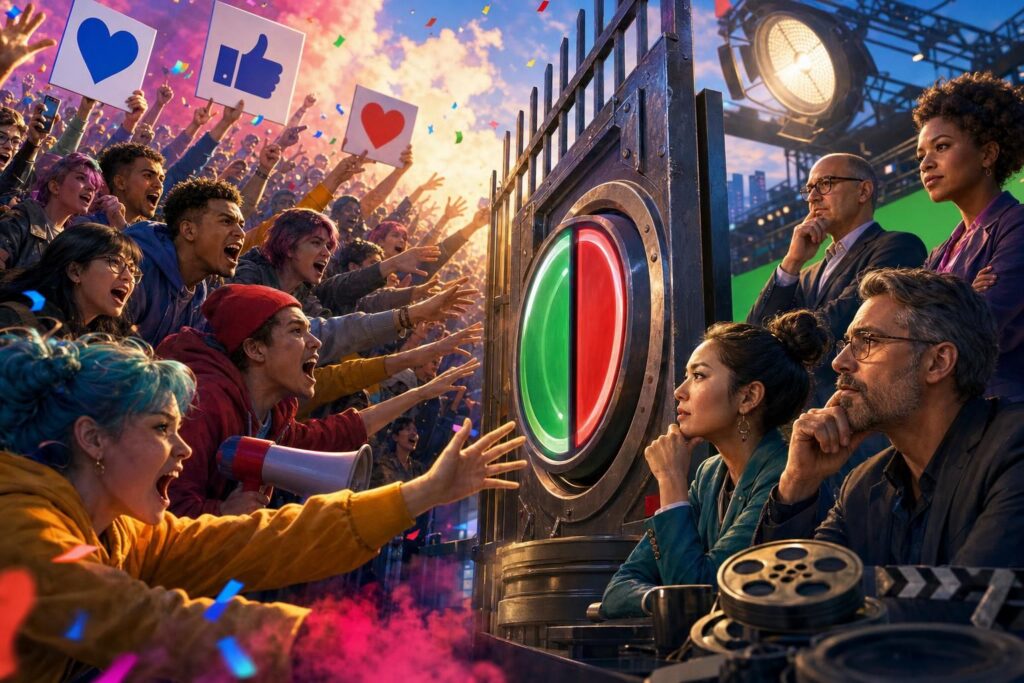
Cancelled shows return when a buyer sees an audience worth serving and can secure the rights, cast and budget to make new episodes.
A cancelled TV show can spend years being mourned online, then reappear with a new season as if someone at the network found its paperwork behind a filing cabinet. Fans understandably take the credit. They petitioned, posted, recruited their friends and made enough noise to concern several social-media managers.
Sometimes that noise helps. But a show comes back when somebody can make new episodes and has a convincing reason to pay for them. The useful question is not simply, “Do people love it?” It is, “Who controls it, who can make it, and what does the buyer gain?”
First, did the show actually come back?
Revival headlines cover several different things. A revival continues an existing series after its original run has stopped. A reboot starts the property again, potentially with different characters or continuity. A spin-off builds a new programme from part of an existing fictional world. An acquisition, meanwhile, may only mean that a service has licensed episodes already made.
That last distinction causes a remarkable amount of false hope. Seeing three seasons appear on a streaming homepage does not mean anyone has ordered season four. It does give the platform a chance to see whether viewers press play, keep watching and seek out the next episode. An old show can acquire a fresh audience without acquiring a single fresh script.
There are other stages between a hopeful headline and a programme returning to screens, too. A reboot or revival might be discussed, developed or announced without ever being commissioned or reaching production. Those are meaningful steps for the people making the project, but they are not the same as a new season viewers can actually watch.
Manifest: when the viewers met the right buyer
Manifest offers a particularly clear example. NBC cancelled the mystery drama after its third season. Fans campaigned for its return, while the show’s availability on Netflix gave the service evidence of substantial interest from its own members. In 2021, Netflix ordered a fourth and final season. As TVLine reported at the time, Netflix pointed to the show’s performance on its service and the opportunity to finish its story.
The campaign mattered as an expression of enthusiasm; it should not be mistaken for a purchase order. NBC and Netflix were assessing different propositions. For NBC, the question was whether continuing the programme worked for its business. For Netflix, an existing story attracting its members could justify a final season that also gave those viewers a reason to stay with the service. Cancellation by one buyer did not prove that every buyer would reach the same decision.
There was a creative advantage, too: Manifest had an unfinished story. A final season offered a clear proposition to viewers who had already invested in the mystery. That does not make every cliffhanger a secret renewal strategy. Plenty of shows end with loose threads and remain firmly ended. Netflix could offer something more specific than the vague promise of “more content”.
The rights can be more complicated than the fandom
Before a revival can happen, the parties need an agreement allowing new episodes to be made and distributed. The company that commissioned a show, the studio that produced it and the services carrying its older seasons need not have identical interests. Existing licensing arrangements can make an apparently obvious move considerably less obvious once lawyers get involved.
This also explains why “Netflix has it, so Netflix can save it” is unreliable. Hosting old episodes and commissioning new ones are different deals. Rights can vary between countries, too: a UK viewer’s streaming menu does not necessarily reveal what a US service can commission or where a proposed revival could be shown internationally. The app tells you where to watch tonight, not who holds every key to the building.
A potential buyer must also consider the people involved. Can enough of the cast return for the proposed story? Are the writers and other key creatives available? What would production cost after a gap, particularly if the original sets are gone and the performers have other commitments? A beloved ensemble drama cannot be revived by asking its cast to keep next Thursday free.
What can a streaming service see that fans cannot?
Public campaigns are highly visible. Viewing behaviour is less so. A platform can assess how its members engage with a programme on its service, while outsiders usually see only fragments of that picture. A trending hashtag might reveal intense affection among a committed group; by itself, it cannot show how many households would watch a whole new season or whether those viewers would otherwise leave.
That gap helps explain why apparently similar campaigns can have different outcomes. A smaller but consistently engaged audience may present a stronger case than a spectacular burst of posts from people who last watched the show three years ago. Equally, strong viewing does not erase a prohibitive production bill or solve a rights problem. There is no universal number of streams that unlocks the revival cupboard.
Streaming has changed the calculation because a service may see value in a cancelled show beyond the performance of its next episode. A new season might bring people to its catalogue, encourage them to watch earlier seasons or help keep existing members engaged. Those are possible incentives, not guarantees about any particular programme. Executives still have to decide whether the expected value outweighs the cost.
That is the important shift: a show’s prospects can depend on the relationship between its audience and a particular buyer, not simply on its popularity in the abstract. A series that no longer fits one network’s plans may suit a streaming service with a different catalogue and audience. But the new buyer needs more than a nostalgic title. It needs a workable deal, a production plan and a reason to believe new episodes will matter to its viewers.
Why do some much-discussed returns never happen?
Announcements and campaigns can make a revival feel inevitable long before it is commissioned, let alone filmed. They are separate milestones. As examples of proposed returns that never reached the screen illustrate, even a developed idea is no promise that viewers will eventually get an episode.
Fans are also allowed to want something that is commercially awkward. The performers may have moved on. A new version might need an expensive cast but attract too small an audience to justify the risk. The rights holder and prospective broadcaster may disagree about the terms. Or the original series may have ended well enough that bringing it back would diminish the thing people miss. Television has occasionally survived a story being finished, although you would not know it from some franchise planning meetings.
So, if you are wondering whether your cancelled favourite has a realistic chance, look beyond the petition total. Are new episodes actually commissioned, or have old ones merely found another home? Is there a buyer with evidence that its audience wants more? Can the rights and returning cast be secured? Is there a story worth the cost?
Manifest returned because those questions produced a workable answer for Netflix, not because fandom acquired supernatural powers. Fans can make a show impossible to ignore. Getting it back on television still requires someone to turn that attention into a deal.