Over 100,000 people back formal Fifa ethics complaint against Infantino over Trump relationships and governance failures ahead of his re-election vote.
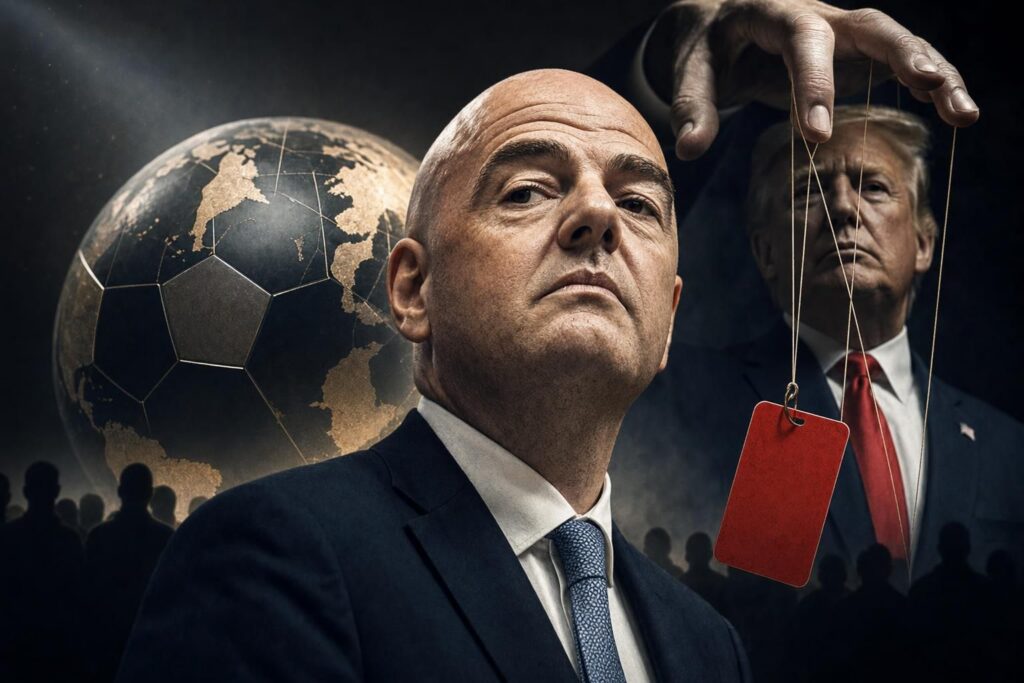
More than 100,000 people have signed up to a formal complaint against Gianni Infantino, accusing the Fifa president of abusing his power through a pattern of actions that allegedly compromise his political neutrality and duty of loyalty to football.
The complaint was formally submitted to Fifa’s ethics committee on Tuesday by the Reboot Fifa campaign, backed by the advocacy group Fair Square. It represents the largest formal objection Fifa has ever received, and it lands at a politically sensitive moment: Infantino declared his intention to stand for re-election as Fifa president for a fourth and final term next year, despite mounting pressure from Uefa and internal critics within other continental confederations.
Understanding what the complaint actually contains matters because the allegations are specific, serious and quite different from typical football governance disputes. This is not merely a disagreement about policy direction. It is an accusation of institutional abuse.
What are the main allegations?
The complaint centres on eight specific incidents, though two dominate: Infantino’s relationship with Donald Trump and his involvement in the now-abandoned Fifa Forward Enterprise scheme.
On the Trump connection, the complainants allege that Infantino has acted in ways that fundamentally compromise his duty to remain politically neutral. This includes his involvement in Trump’s Board of Peace in the Middle East, his awarding of the Fifa peace prize to Trump in December 2025, and most significantly, his documented involvement in requesting that Fifa overturn Folarin Balogun’s red card at the World Cup after Trump personally asked him to do so.
Trump publicly admitted he requested the intervention. Balogun, an England player, received a red card during the tournament. The apparent intervention by Infantino at Trump’s behest is presented in the complaint as direct evidence of a breach of Fifa’s duty to operate independently of political pressure.
The second major allegation involves the Fifa Forward Enterprise scheme, an ambitious business plan that has since been abandoned. Uefa has already separately announced its intention to pursue criminal claims in the United States over this scheme, suggesting the governance concerns are not limited to the complaint itself.
Beyond Trump and the FFE scheme, the complaint lists Infantino’s public promise to work with Trump to “make not only America great again but also the entire world”—a statement Fair Square argues demonstrates a failure to maintain political neutrality and represents a president prioritizing personal political alignment over Fifa’s institutional independence.
How serious is this complaint?
In conventional terms, it is extraordinarily serious. The scale alone—100,000 signatures—is unprecedented in Fifa’s history. The fact that the Norwegian football federation has backed it, along with 50 European parliamentarians, means this is not merely an internet petition. These are institutional players within world football’s hierarchy.
An original complaint was submitted in December but received no response from Fifa’s ethics committee. The re-submission with 100,000 signatures represents a deliberate escalation designed to make ignoring it substantially harder.
However, the complaint faces a practical challenge: Fifa’s ethics committee operates as an internal disciplinary body within an organisation widely understood to struggle with governance standards. The committee has historically shown limited willingness to take action against Fifa’s president, particularly on matters that could be characterized as political rather than strictly footballing.
The complaint relies on the committee’s stated duty to uphold “the integrity and reputation of football.” That is theoretically a strong basis for action. In practice, the committee would be making an extraordinary decision to sanction a sitting president seeking re-election, particularly over matters involving an American political figure.
Why does this matter for English football?
For UK audiences, the immediate relevance involves Folarin Balogun. Balogun was born in New York to Nigerian parents and was eligible to play for England. A red card during the World Cup would have been a significant career incident, and the allegation that Infantino intervened at Trump’s request specifically because Trump wanted it raises serious questions about impartial governance.
More broadly, Uefa has positioned itself as the voice opposing Infantino’s re-election. The separate criminal claims Uefa is pursuing over the FFE scheme are part of a coordinated effort to undermine his position. If this ethics complaint gains traction, it strengthens the case against Infantino ahead of next year’s re-election vote among Fifa’s member associations.
English football has an interest in seeing Fifa governed competently because the Premier League’s global reach depends on stable, credible international governance structures. Infantino’s documented preference for Trump creates potential conflicts of interest that could affect decisions affecting English football or English players.
Is the complaint likely to succeed?
The answer depends on what “succeed” means. If success means the ethics committee formally sanctions Infantino for abuse of power, it is unlikely unless there is significant political pressure from member associations. The committee is reluctant to act against sitting presidents, and any action would be politically explosive.
However, if success means damaging Infantino’s credibility before next year’s re-election vote, the complaint has already partially succeeded. The 100,000 signatures represent visible public pressure. Uefa’s simultaneous pursuit of criminal claims, combined with this ethics complaint, creates a narrative that Infantino’s governance is under serious challenge.
The complaint could also succeed in shifting the conversation around Infantino’s re-election from a routine administrative matter to a contested election where member associations must explicitly vote for a president facing serious institutional objections.
What comes next?
The ethics committee will now have to respond formally to the complaint. Whether it investigates depends partly on whether the committee interprets the allegations as falling within its remit. The committee could argue that Infantino’s political relationships are beyond its scope, or it could accept that his involvement with Trump creates conflicts of interest relevant to Fifa’s governance standards.
The timeline matters because Infantino’s re-election vote is next year. Any ethics process will unfold against the backdrop of that election. If the committee moves slowly, it may complete its investigation too late to influence the re-election vote. If it moves quickly, it could reshape how member associations evaluate Infantino’s candidacy.
Fifa’s own statement defending Infantino suggests the organization sees this as a political attack rather than a legitimate governance concern. The organization dismissed the complaint as evidence of a “concerted and ongoing effort by some to undermine Fifa and its president.”
That framing is itself significant. By characterizing institutional objections to Infantino’s conduct as political attacks rather than legitimate governance concerns, Fifa is doubling down on a defensive posture that Uefa and other opponents will cite as evidence of the governance problems they are highlighting.
The complaint will not automatically force Infantino from office. But it represents a significant escalation in organized opposition to his presidency and it arrives at exactly the moment when his re-election was supposed to be a formality. For English football and Fifa’s credibility more broadly, the next few months will be crucial in determining whether this complaint becomes a genuine crisis or merely an embarrassment Infantino weathers on his way to re-election.