Behind-the-scenes footage clarifies how Peter received treatment, but doesn’t prove hospital staff recognised or protected him.
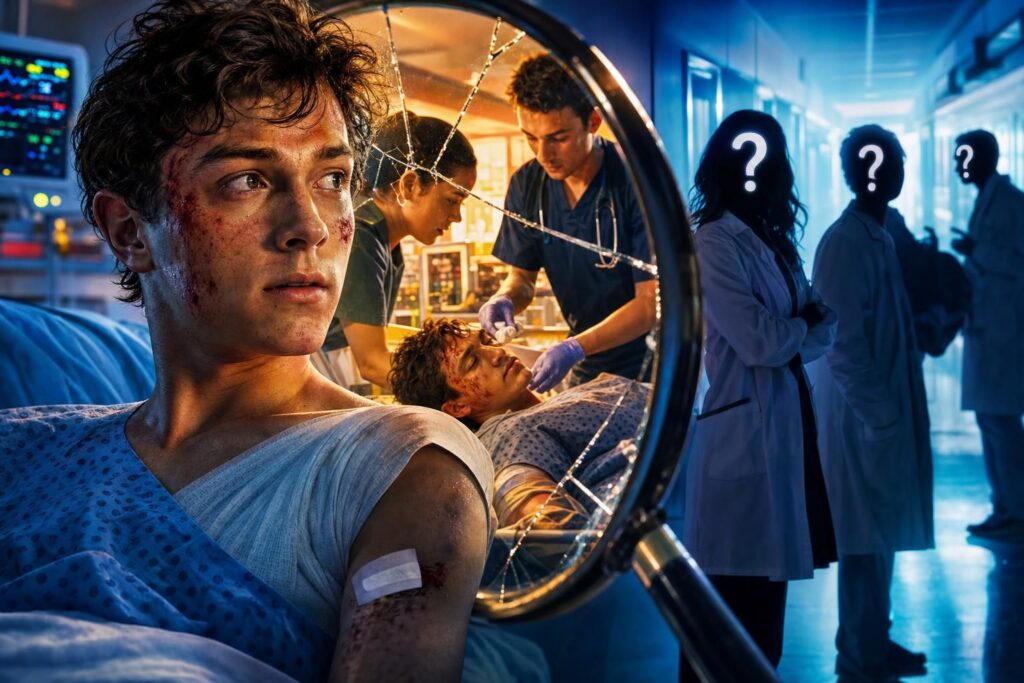
A behind-the-scenes featurette released alongside Spider-Man: Brand New Day shows something the theatrical film deliberately withholds: Peter Parker’s mask being removed in an operating room. The moment appears straightforward enough. It answers a practical question any viewer might ask: if Peter’s identity is secret, how does he receive medical treatment after his injuries? The answer, it seems, is that he simply gets unmasked like any other patient in an emergency.
Except that single clarification has bred considerable speculation among fans about what the moment actually means for the story. The footage, according to GamesRadar’s report from the film’s digital launch, shows the mechanics of the scene the theatrical cut approaches differently. That distinction matters more than it might initially appear, because seeing Peter’s face is not the same as identifying Peter Parker, and neither of those things is the same as his secret being compromised.
The theatrical Spider-Man: Brand New Day shows Peter recovering in hospital without explicitly depicting the moment his mask came off. The film lets viewers infer what must have happened, medical emergency, mask removed, treatment administered, without spelling it out. The behind-the-scenes material makes that inference literal. But making something literal doesn’t automatically make it resolved.
What the Footage Actually Shows
The operating-room sequence clarifies the mechanics of Peter’s treatment but leaves the story’s central questions untouched. Yes, medical staff saw his face. That is not the same thing as them recognising him as Peter Parker, a teenage Queens resident who happens to be a superhero. The gap between those two facts is precisely where the theatrical film wanted to maintain ambiguity, and where the behind-the-scenes material stops short of providing answers.
Tom Holland, speaking about the film’s emotional core, noted that “Peter’s journey in this movie is about him learning that he can’t do this alone.” The hospital sequence, whether filmed explicitly or left implicit, serves that narrative purpose. Peter isn’t invincible. He gets hurt. He needs help. Someone has to see him vulnerable, stripped of the mask that protects both his body and his identity.
The behind-the-scenes footage makes visual what the theatrical cut suggested thematically. But that doesn’t resolve whether the people treating him made a conscious choice to keep his secret. It doesn’t establish that they recognised him. It doesn’t confirm they agreed to protect his identity. It simply shows that a face existed beneath the mask, which audiences already knew.
What Remains Unanswered
Speculating about hospital staff recognition, their knowledge of Spider-Man’s civilian identity, or their decision to maintain his secret requires information the footage doesn’t provide. In the absence of explicit confirmation, viewers have filled those gaps with assumption. That’s natural enough when you’re watching a story about a character whose entire premise depends on maintaining a secret. The temptation to solve every mystery is strong.
But the featurette serves a narrower purpose. It shows how the scene works practically. It clarifies what the theatrical film treats as inevitable consequence rather than narrative spectacle. The operating room exists because Peter needed medical attention, not because the film wanted to explore hospital-staff reactions or plot conspiracies to protect Spider-Man’s identity.
Fans have long wondered whether anyone in the MCU’s New York would eventually connect dots that seem obvious to viewers. The hospital scene, in either version, doesn’t answer that question. It only confirms what was already obvious: that there is a Peter Parker beneath the Spider-Man suit, and that Peter Parker is a person who can be injured, treated and healed like anyone else.
Spider-Man: Brand New Day proved the MCU’s appeal remained intact following years of audience fatigue with franchise releases. Part of that success came from grounding the story in tangible consequences. Peter gets hurt. He bleeds. He needs help from people who matter to him. The hospital scene, whether glimpsed in the theatrical release or made explicit in behind-the-scenes material, visualises that vulnerability.
The behind-the-scenes footage isn’t revealing a hidden truth about the plot. It’s offering a production choice that the film itself made differently. What fans see matters less than understanding what they’re actually seeing: not a conspiracy explained, but a moment clarified, one that raises as many questions as it answers about who knows what, and who has chosen to protect whom.