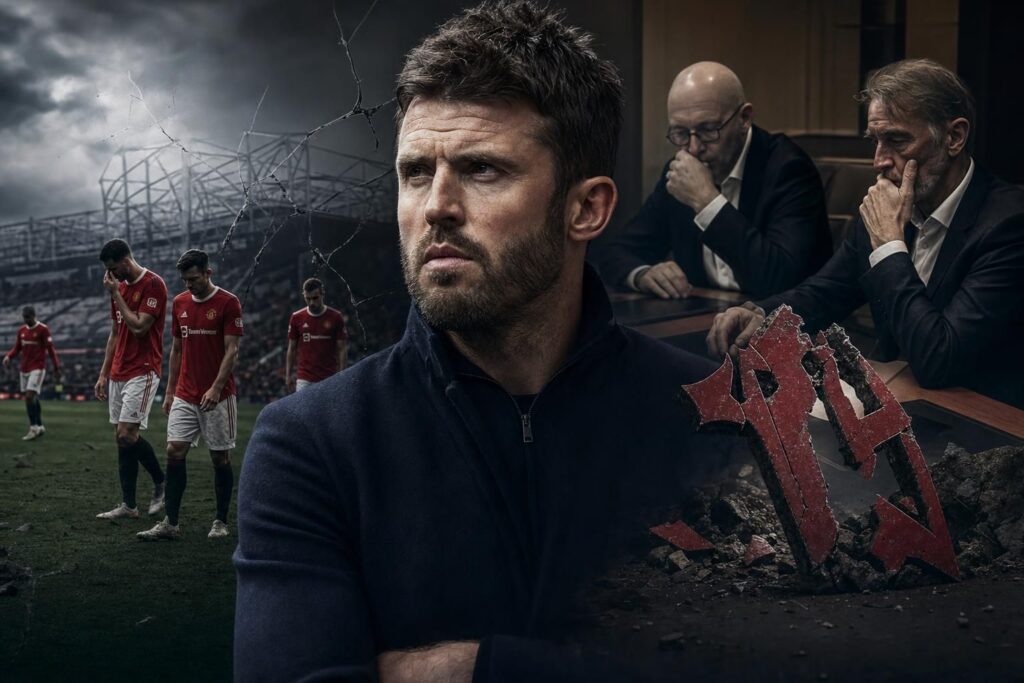

Elite 15-year-old prospect JJ Gabriel’s shock deregistration request reveals systemic pressures facing talented teenagers at major clubs, not individual failure.
Manchester United’s 15-year-old sensation JJ Gabriel was supposed to make history on Wednesday night. Instead, 24 hours before scheduled inclusion in the first-team squad for the Carabao Cup against Brighton, he formally requested cancellation of his academy registration and walked away from the opportunity that would have made him the club’s youngest competitive debut player ever.
It is, on the surface, baffling. Gabriel had spent the previous 18 months delivering precisely what elite academies demand. On 5 April 2025, aged just 14, he became Manchester United’s youngest-ever U18 player, scoring twice after coming off the bench against Leeds. The following season he scored 23 goals in 23 U18 Premier League appearances, became the inaugural U18 Premier League Player of the Season and the youngest-ever winner of United’s Jimmy Murphy Young Player of the Year award. Then, in September 2026, he scored a hat-trick on his UEFA Youth League debut. The pathway United had supposedly shown him was materialising. The promise was becoming real. And then he asked to leave.
What makes this story genuinely uncomfortable is not Gabriel’s request itself. It is what his request reveals about the machinery surrounding teenage excellence at major football clubs.
The Timeline of a Record-Breaking Rise
Gabriel joined Manchester United aged 11 and progressed through the academy system with the kind of consistency that usually suggests a player on track for genuine success. By the time he became United’s youngest U18 debutant, he was already training regularly with the first team. The statistics that followed were not marginal improvements; they were the kind of numbers that typically announce a prospect as genuinely different.
The hat-trick against Sabah FK in the UEFA Youth League was the kind of performance that gets circulated within recruitment departments at rival clubs. The U18 PL Player of the Season honour and the Jimmy Murphy Award were not ceremonial; they were institutional recognition that United’s own staff considered him among the most talented teenagers at Carrington.
The Brighton squad inclusion announcement would have represented a logical continuation of that trajectory. Kobbie Mainoo holds the existing Carabao Cup record, having debuted at age 17 in 2023. Gabriel at 15 would have been significantly younger. In the modern context of English football, where youth progression is treated as both genuine opportunity and marketable narrative, this was not a casual fixture. It was a statement: the pathway was open. The moment had arrived.
Except it apparently had not.
What Actually Happened: Registration, Contract, and Uncertainty
Gabriel submitted his deregistration request on September 15-16, 2026. According to Manchester United’s public response, as reported by the Guardian, he “cannot be deregistered” because he holds a contract through the end of the season. This is where the story becomes legally and contractually complicated rather than simply emotional.
At 15, Gabriel cannot sign a professional contract. He can sign a scholarship agreement at 16, which would represent his first binding senior commitment. That date, in October 2027, is a contractual cliff-edge. Between now and then sits 18 months during which a teenage prospect exists in an unusual legal space: contracted to their academy, but not yet able to commit professionally, and therefore exposed to approaches from other clubs or family-driven strategic decisions about their future.
This vulnerability is not accidental. It is structural. Premier League and FA regulations create precisely this window. Major European clubs – Barcelona, Manchester City, Real Madrid, and others, actively monitor this window. Gabriel is not the first elite teenager to navigate it, and he will not be the last.
United’s statement claimed the club had shown Gabriel “a pathway to the first team” through meetings involving senior management. Those meetings apparently included input from Ruben Amorim, who was Manchester United’s head coach until his departure in January 2026, and Sir Alex Ferguson. For a 15-year-old, this level of engagement represents significant institutional investment. It also, potentially, represents a different kind of pressure altogether.
When Excellence Becomes Impossibility
Here is the central paradox that Gabriel’s withdrawal illuminates: the very consistency that marks him as exceptionally talented may simultaneously have made his position unsustainable.
Elite youth academies operate on a clear logic: you demonstrate excellence at your age group, you progress to the next level. You score nearly a goal a game, you are performing above your cohort. The natural interpretation, especially when senior management is meeting with you personally, is that you are on the accelerated pathway. That excellence is being rewarded with opportunity.
But excellence at academy level does not guarantee readiness for senior football, and senior football does not care about U18 statistics. The gap between U18 Premier League and first-team competitive football is not merely physical; it is contextual. Defenders at Brighton on Wednesday night have professional experience, tactical organisation, and an incentive structure Gabriel has never encountered. The Carabao Cup is not a developmental environment, it is a competitive fixture.
What may have seemed like a logical next step to the club might, from Gabriel’s perspective or his family’s perspective, have represented something else entirely: a test he was not ready for, a spotlight he did not want, or an implicit acknowledgement that he had exhausted what the academy could offer him. The meetings with Amorim and Ferguson, intended as reassurance, may have instead felt like pressure.
The Managerial Succession Factor
Amorim is gone. Michael Carrick is now Manchester United’s permanent head coach, appointed to a two-year deal after the club’s January upheaval. Whatever relationship Gabriel may have developed with Amorim, and whatever conversations they had about his future, existed within a specific context. Carrick has a track record as academy advocate, but he has not yet built the kind of established relationship with top prospects that his predecessor may have had.
It is reasonable to speculate whether Gabriel’s confidence in the pathway shifted when the figurehead changed. It is not reasonable to claim it did. What we can say with confidence is that managerial transitions at major clubs often destabilise academy pathways precisely because promises and timelines become uncertain when the person making them departs.
The Structural Reality
Gabriel’s request, on a basic level, is an exercise of autonomy by a teenager and his family. But the context in which that autonomy operates is not neutral. He is a 15-year-old asset of significant value to Manchester United, of genuine interest to Barcelona, Manchester City, and Real Madrid, and of contractual complexity that advantages the club but potentially disadvantages the player until he reaches contractual maturity at 17.
The elite academy arms race is real. Major European clubs do not monitor top teenage prospects casually; they monitor them systematically. English teenagers, because they are often stronger earlier than their continental peers, are particularly attractive at 15-16. Gabriel’s registration request may be tactical positioning by his family. It may be genuine burnout. It may be loss of faith in Carrick’s tenure. It may be external pressure from rival clubs. Most likely, it is some combination of factors that Gabriel himself, at 15, may not fully articulate.
What is certain is this: a teenager considered one of the most exciting prospects at one of England’s biggest clubs has asked to leave the moment that prospect became real. That contradiction is not about Gabriel. It is about what elite football does to talented 15-year-olds and the institutional structures that surround them.
United will attempt to retain him. Gabriel cannot be deregistered during his contract period. But the club’s legal right to retain a player does not extend to retaining his commitment or his desire to stay. The paradox that created this moment, excellence rewarded with expectation, expectation generating pressure, pressure producing withdrawal, is one that elite football has yet to solve.