Three Chinese brands have ended Mbappé partnerships, but the circulating Mao-related clip remains unverified and no acknowledgment from him is established.
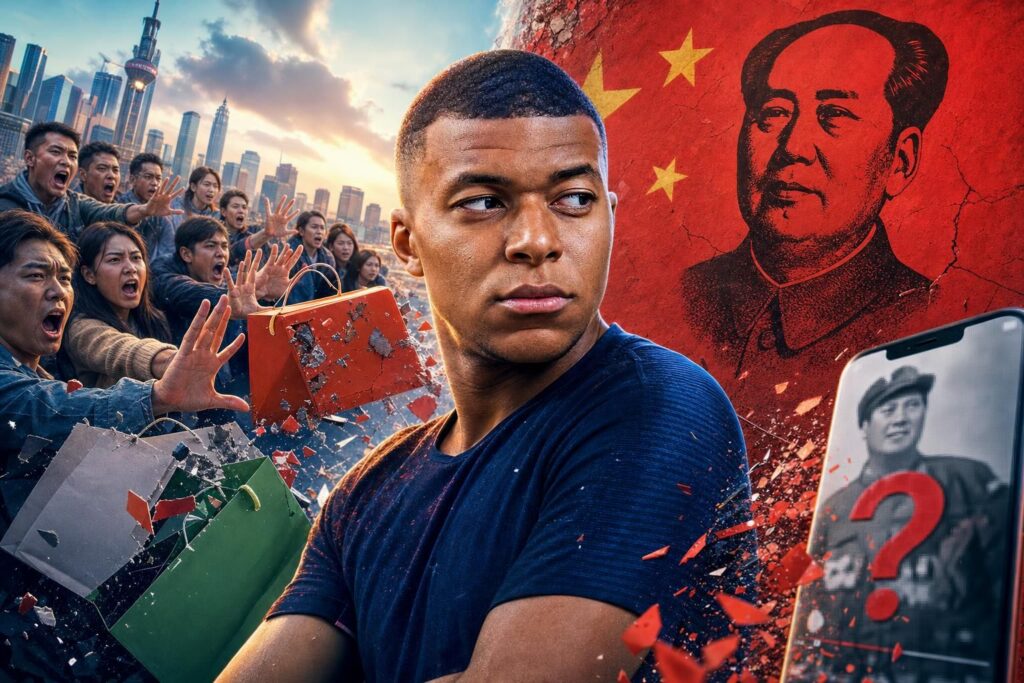
Three Chinese brands have ended partnerships with Kylian Mbappé following the circulation of a clip apparently involving a meme about Mao Zedong. The commercial decisions have been reported; the authenticity of the footage has not been established.
Reporting available on 27 October names Dongpeng Beverage, Mengniu and Milkground. AFP reported the first two announcements, while Associated Press identified Milkground as a third company ending its relationship with the footballer.
That distinction matters, but so does the larger one: a sponsor announcing its departure does not authenticate the material behind the controversy. The corporate statements are emphatic. The evidence about the clip remains incomplete.
Which brands have ended their Mbappé partnerships?
According to AFP, Dongpeng Beverage and Mengniu announced on 27 October that they were ending cooperation with Mbappé. In translated statements carried by the agency, Dongpeng said it had zero tolerance for behaviour that “offends national sentiments”, while Mengniu opposed words or actions that “hurt the feelings of the Chinese people”. Those are the companies’ descriptions of the alleged offence, rather than independent findings about what Mbappé said.
Associated Press separately reported Milkground’s decision to end its partnership. Across the available reporting, three brands have been named. An account listing only Dongpeng and Mengniu would leave out a material development.
AFP also reported that Mbappé appeared in Dongpeng advertising during the 2026 World Cup. This was an existing commercial relationship, with his image already being used to promote the brand.
The financial terms of the partnerships are not established in the available reporting. There is no reliable figure here for the value of the deals, any unpaid fees or the financial effect of their termination. Counting departing sponsors is possible; attaching a price tag would be guesswork.
What the Mao clip does, and does not, establish
The accounts describe a circulating clip apparently showing Mbappé discussing a meme connected to an image of Mao, the founding leader of the People’s Republic of China, who died in 1976. Crucially, AFP’s report says its fact-checking team could not verify the clip’s authenticity at the time.
Any apparent speech in that footage must therefore remain attributed to an unverified clip, rather than presented as a confirmed quotation from Mbappé. Nor does the available evidence establish that he intended an insult. Authenticity, context and intention are separate questions. A strongly worded brand statement cannot answer all three by force of adjectives.
AFP describes jokes about Mao as socially taboo in China and reports objections from Chinese football outlet Dongqiudi to the apparent remarks. That helps explain why the material drew criticism. It does not resolve whether the footage is authentic.
The distinction also works in the other direction: an inability to verify a clip is not proof that it is fabricated. The responsible position is narrower than either instant verdict. Its authenticity remained unestablished in the reporting available on 27 October.
Commercial consequences can arrive before factual certainty
Endorsements trade on the appeal of an athlete’s name and image. Companies want some of that recognition attached to their products; controversy can make the same association commercially uncomfortable. A footballer’s image is an asset, right up to the point when a sponsor starts treating it as a liability.
As our examination of David Beckham’s commercial business explains, the business built around a footballer can extend well beyond performances on the pitch. That makes sponsorship decisions significant in their own right, without needing to invent a sporting punishment or a dramatic loss estimate.
Has Mbappé acknowledged the clip? AP reported that it could not immediately obtain comment from his representatives. That establishes an unsuccessful request for comment at that point, not a refusal to respond, an admission or a denial.
The clear development is the reported end of three commercial partnerships. What remains unresolved is the authenticity of the material that prompted the controversy and Mbappé’s account of it. The sponsorship story has moved faster than the verification. Readers should not be asked to pretend the two have reached the same place.