Start with The Lord of the Rings trilogy, then watch The Hobbit films and The Rings of Power; the series is earlier, but not required viewing.
Start with The Fellowship of the Ring. Yes, The Rings of Power takes place thousands of years earlier. No, that does not mean you need to watch a television series before anyone is allowed to leave the Shire.
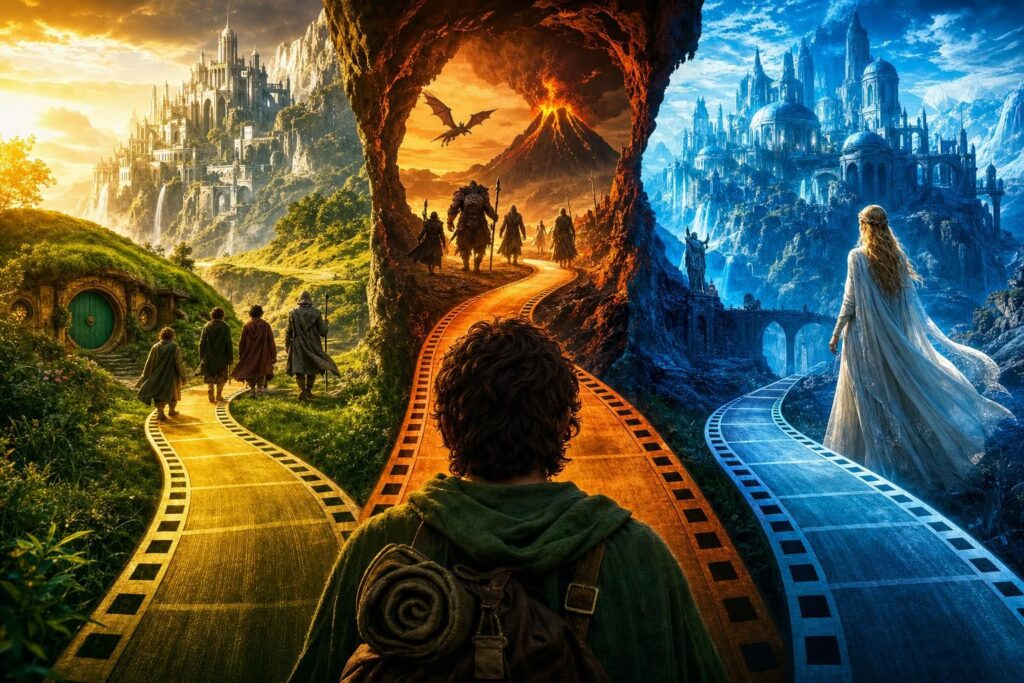
For a newcomer, the best route through the main live-action adaptations is Peter Jackson’s Lord of the Rings trilogy, then his Hobbit trilogy, then The Rings of Power. That gives you a clear introduction to Middle-earth before sending you back to stories about the Rings’ origins. If you want the order of events in Middle-earth’s history, there is another route. The key is to separate chronology, the order events happen in the fictional world, from continuity, the question of whether adaptations belong to one shared screen story.
The best watch order for newcomers
Watch The Fellowship of the Ring, The Two Towers and The Return of the King first. Follow them with The Hobbit: An Unexpected Journey, The Hobbit: The Desolation of Smaug and The Hobbit: The Battle of the Five Armies. Then move on to The Rings of Power, starting with its first season.
This is an order of introduction, not fictional history. The Lord of the Rings trilogy gives you a focused entry point: Frodo has a dangerous Ring to destroy, and the story reveals the wider world as his journey demands. Beginning with the Second Age instead means starting with a much earlier, broader stretch of Middle-earth’s history. That can be rewarding, but it is not the easiest way in.
The Hobbit films take place before Frodo’s journey, but most first-time viewers are better off watching them afterwards. Bilbo’s discovery of the Ring lands differently once you know what it will mean later. You also get to meet Middle-earth through the trilogy that makes the Ring’s danger central, rather than beginning with a detour into its past.
Put The Rings of Power last and it becomes an earlier-age excursion, not mandatory homework. Its story of the Rings’ forging has added interest when you already know the trouble that follows. You can enjoy those echoes without expecting every detail to line up neatly with the films.
The chronological Lord of the Rings watch order
If you would rather follow the main events from earliest to latest, watch The Rings of Power, then the three Hobbit films, then The Fellowship of the Ring, The Two Towers and The Return of the King. That puts the series first, followed by the films in the order of their main stories.
The Rings of Power is set in the Second Age, the era associated with the forging of the Rings of Power and the rise of Sauron. The main events of The Hobbit and The Lord of the Rings take place in the Third Age. Bilbo’s adventure comes before Frodo’s, and both are separated from the series’ setting by thousands of years.
This is a useful broad chronology, rather than a promise that every scene across all seven titles can be arranged by date. The films include or discuss earlier history, so the practical guide is to follow where each story primarily takes place. Choose chronology-first if you already know the films or are especially interested in Middle-earth’s history. For a first encounter, the release-order films offer a more direct introduction.
Is The Rings of Power a prequel to the films?
It is a prequel in setting and historical subject matter, but it should not be treated as a direct instalment in Jackson’s film continuity. The series and films draw on Tolkien’s Middle-earth and share elements of its history, including Sauron and the Rings. That establishes a connection between their worlds. It does not guarantee that the series will provide a seamless explanation for everything in the films.
“Canon” can make this sound like a dispute requiring maps, family trees and a long evening. The simple distinction is that Tolkien’s writings establish the underlying history, while the films and television series are adaptations of that world. An adaptation can depict a recognisable event while making its own choices about how to tell it. Shared history does not make separate screen adaptations one coordinated storyline.
That matters if you are expecting the sort of prequel that fills in every gap before the original story begins. The Rings of Power can add context to the world of The Lord of the Rings, but it is not a chapter you must finish before pressing play on The Fellowship of the Ring. The trilogy does not depend on having watched the series.
Which order should you choose?
For a first watch: The Lord of the Rings trilogy, The Hobbit trilogy, then The Rings of Power. This gives you the clearest introduction before exploring the earlier history.
For Middle-earth chronology: The Rings of Power, The Hobbit trilogy, then The Lord of the Rings trilogy. This follows the main eras depicted, but starts with the most distant point in the timeline.
There is no need to overthink it. If you want to understand the story most viewers meet first, begin with Frodo. If you want to trace the world’s history, begin in the Second Age. Neither choice turns the other into a mistake; they simply answer different questions.
How to watch in the UK
The Rings of Power is a Prime Video series, so UK viewers need access to Prime Video to watch it. The films are also available through Prime Video and related Amazon platforms, but do not assume every film is included with a subscription. A title may be offered to rent or buy, and availability can change, so check each listing before planning a marathon.
If you only have time to pick one starting point, make it The Fellowship of the Ring. If you want events in historical order, begin with The Rings of Power and accept that you are choosing chronology over the simplest introduction. Middle-earth has room for both journeys. It just does not require a newcomer to begin with the ancient paperwork.