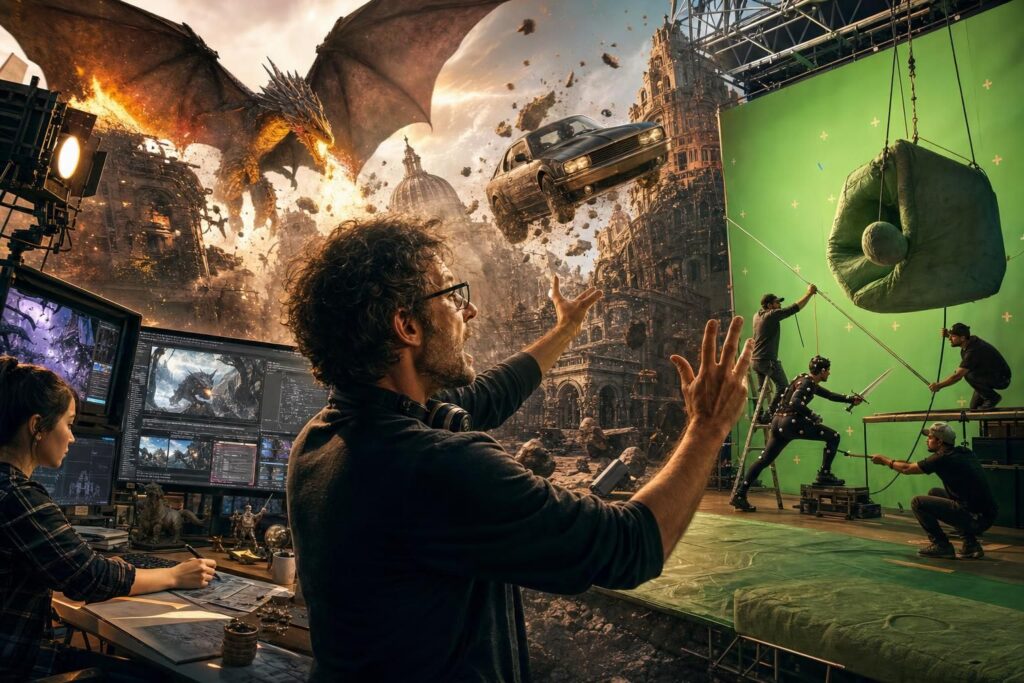
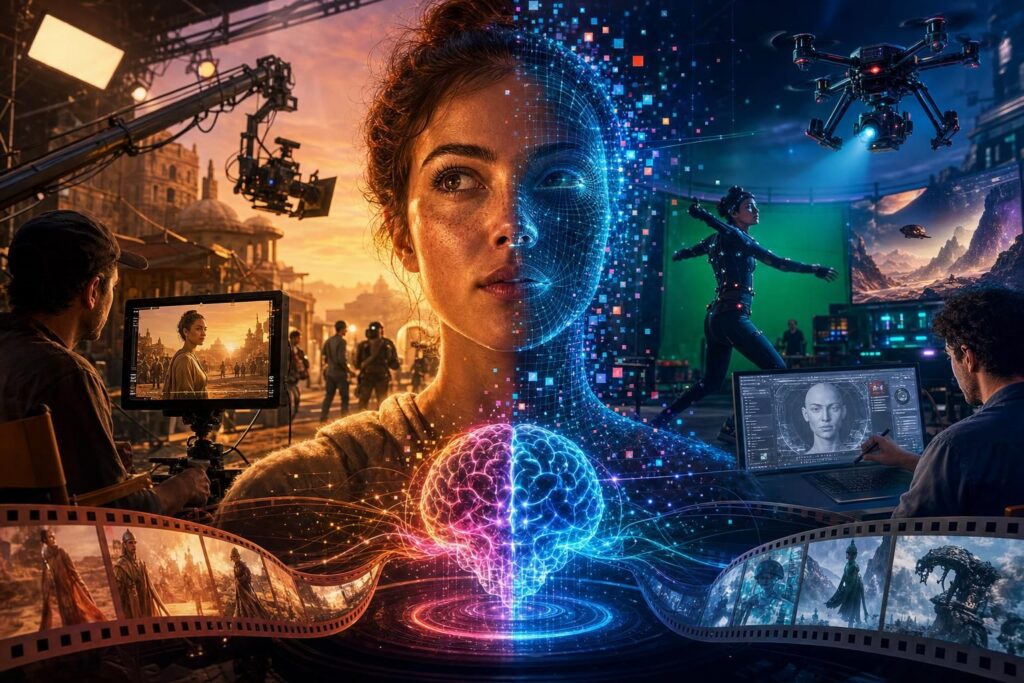
AI can assist VFX or generate synthetic performances, but a digital-looking shot alone proves neither the method used nor the permissions obtained.
A younger face appears on an actor. A familiar voice returns to a screen. An entire city materialises behind people who spent the shoot standing in a warehouse. Which of those involved AI? You cannot tell just by watching, and the warehouse is the least suspicious part.
“AI” can mean software helping artists alter an image, or a system generating new material from learned patterns. Those uses raise different creative and labour questions, yet they can look remarkably similar in a headline about a film “using AI”. The useful questions are what the production says it did, whose work or likeness was involved, and what the tools were allowed to produce.
A digital effect is not automatically generative AI
Visual-effects artists have long altered faces, built environments and combined performances with computer-generated imagery. A de-aged actor, for example, does not prove that a system invented their performance. The actor may have performed the scene while artists changed how that performance looked, using AI-assisted tools alongside more established techniques.
George Miller discussed the work involved in showing a younger Furiosa in an interview about the film. It is a useful example because “de-aging” describes the visible result, not a complete technical inventory. Without a production account of its workflow, viewers cannot identify every tool from the finished shot. The face may be younger; the press release has not thereby become a software manual.
A more explicit account comes from reporting on Bobby Deol’s de-aging work, which describes a process involving AI and VFX. It shows how the two can sit inside the same job rather than occupy opposing camps. It does not mean every frame was generated from a prompt, or that the performer was replaced. “AI was used” can be true while leaving most of the interesting production questions unanswered.
What changes when AI can reproduce a performer?
A digital replica brings the question closer to the person on screen. Software can simulate a performer’s likeness or voice, potentially creating material beyond what they recorded for the original scene. At that point, a discussion about tools becomes a discussion about permission, pay and control.
SAG-AFTRA’s resources for its 2023 TV and theatrical contracts set out protections concerning digital replicas, including consent and disclosures about their use. The contract materials include requirements for identifying the picture or episode in which a replica will be used and describing its use. Permission for one project should not be mistaken for a general licence to keep producing performances. The union’s materials also address consent after a performer’s death. These are terms under particular negotiated contracts, not a single agreement governing every production worldwide.
There is a creative distinction, too. Altering the appearance of a performance someone gave is different from making them appear to deliver a new one. Both may involve complicated VFX, but the second makes it especially important to ask who authorised the result. A convincing imitation is not evidence of consent. If it were, every excellent impressionist would own a television studio by Thursday.
Does voice cloning count? Ask what was made, and for whom
Voice is a particularly clear example of why appearances can mislead. A production might use an actor’s recorded lines, edit them, or generate speech resembling their voice. Hearing a familiar character tells you who the story wants you to recognise. It does not tell you which method supplied the dialogue.
The questions extend beyond film and television. The Associated Press reported on SAG-AFTRA’s action concerning an AI-generated Darth Vader voice in Fortnite. A game is not a TV drama, so that dispute is not proof of how a particular show was made. It does, however, illustrate the stakes of synthetic performances: authorisation to use a famous character and permission concerning a performer’s work are not necessarily the same thing.
Nor does a public argument about permission prove that every production using a synthetic voice has acted improperly. The answer depends on the actual use and the agreements that apply. “They made the voice sound right” settles almost nothing.
Where does AI sit behind the camera?
Some AI-assisted work may never appear as a distinct effect. Software can help artists process or alter material in post-production, leaving a result that looks like an ordinary shot. But broad claims that “the film was made with AI” conceal more than they reveal. Did a tool help modify footage? Was a face altered? Was new speech generated? Did a system produce an image used in the final cut? Those are separate claims, and each needs its own evidence.
The distinction matters to the people making the programme as well as those watching it. A tool that saves time on a task may change a workflow without removing the need for performers or VFX workers. A proposed digital replica raises a different set of decisions about consent, compensation and reuse. The benefit to a production and the risk to a worker cannot be assessed from the word “efficiency” alone, which is doing rather a lot of overtime in this conversation.
Studios and performers have disagreed over how protections should work. The producers’ alliance, the AMPTP, has publicly addressed consent and compensation for generating performances with an actor’s likeness, while SAG-AFTRA has argued for enforceable protections around digital simulations. A technical ability is not, by itself, an agreement about acceptable use.
How can you tell what a film or show actually used?
Look for the most precise public account available: a production disclosure, an identifiable practitioner describing the process, or reporting that attributes a method to the people who used it. Then separate what was done from what was merely possible. An account of de-aging supports a claim about an altered appearance; it does not automatically show that AI wrote the scene, generated the actor’s dialogue or replaced the crew.
Contract language answers a different question: what protections may apply to certain uses. It does not prove that a particular film used a technique, or that its use complied with a contract. Equally, a production’s silence does not prove AI was absent. Some work simply is not described publicly in enough detail to classify.
That leaves a less dramatic but more useful way to watch the credits roll. AI can assist artists with an effect, contribute to a de-aged image or generate elements of a synthetic performance. Sometimes there is a named account of the method; sometimes there is only a finished shot and a confident claim online. Treat those as different kinds of evidence. The screen can show you what changed. It rarely tells you, on its own, who made the change or who gave permission.