Originals give viewers a reason to subscribe, while familiar licensed shows offer something to watch between premieres, even if their rights can expire.
A new series might persuade you to subscribe to a streaming service. Three weeks later, when you have finished it and cannot face choosing another, an old favourite might persuade you to stay. That distinction explains why platforms pay both to make programmes and to license shows somebody else made years ago.
From the sofa, the strategy can look odd. Why pay for a familiar sitcom when you could commission the next big hit? Because a hit can be an event, while a useful catalogue gives subscribers a reason to open the app on an ordinary Tuesday. Streaming services need both sorts of Tuesday.
Originals help win subscribers, libraries help keep the app useful
An exclusive original gives a service a clear answer to a prospective subscriber’s question: “Why this one?” It can attract attention around a launch and offer something viewers cannot find in the same way elsewhere. Originals also give a platform a chance to build a distinct identity, though the rights attached to any production depend on its particular agreements.
Licensed shows do another job. They let a service add programmes across genres without having to develop every title itself. Someone might join for a new drama, then spend the rest of the month watching an older comedy, a crime series or something familiar enough to follow while folding laundry. That viewing may not dominate the marketing campaign, but it is part of what the subscription offers.
This is a portfolio argument, not a claim that every old show is a bargain or every original is an expensive gamble. Parrot Analytics’ analysis of content age describes the continuing place of older titles in streaming catalogues. A programme does not stop being useful because its cast now looks suspiciously young in the publicity photographs.
Retention is about what happens after the finale
Subscribers can leave. The industry calls that churn, a neat word for the moment somebody checks another direct debit and decides they have watched enough television for now. Deloitte’s analysis of streaming subscribers identifies content and perceived value among the pressures shaping those decisions.
A service built around occasional premieres risks leaving some viewers with long gaps between reasons to visit. A broad catalogue can help fill them. Familiarity matters: choosing a programme you already trust takes less effort than gambling your evening on a thumbnail, a dramatic synopsis and an algorithm that thinks one murder mystery means you want 40 more.
That does not mean platforms can buy a stack of old television and put their feet up. A library’s value depends on whether its programmes suit the audience, what else is available and what the rights cost. Nor can public viewing data tell us exactly why any individual subscriber stays. The sensible conclusion is narrower: dependable programmes can make a service useful between headline releases.
For viewers, this is the comfort-viewing effect. A familiar series can be an easy choice when there is no appetite for a demanding new show. It may not be the reason someone signs up, but it can help make the monthly fee feel worthwhile after the must-watch premiere has been consumed.
Why not license everything and skip the originals?
Because a licence is permission, not permanent possession. Deals can limit where a title appears, how long it remains available and whether another service can show it at the same time. Terms vary by programme, territory and deal. When an agreement ends, a platform may renew it, lose the title to another buyer or decide the price is no longer worth paying.
That creates risk for a service whose appeal relies heavily on shows it does not control. A working paper examining licensed-series exits on Netflix finds that the departure of licensed series increases the likelihood of subscriber churn. That is evidence about the effect studied, not proof that every departing show sends viewers racing to cancel. Still, a programme can become part of someone’s routine without becoming a permanent part of the platform.
Originals can reduce dependence on other rights-holders, while giving a service more scope to differentiate its offer. But “original” does not automatically mean the platform owns every right or can keep a programme available forever. The potential advantage is greater control and a distinctive title, not a magic certificate against future changes.
Why does a show disappear from one UK app and appear on another?
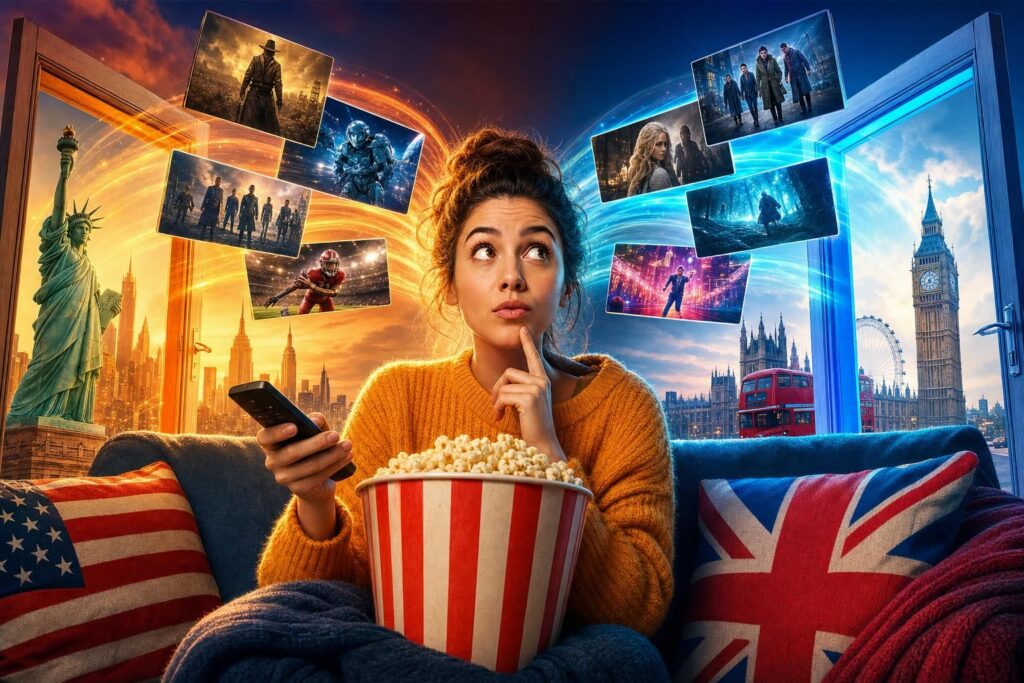
Streaming rights are often sold for particular territories and periods. So the answer to “Where can I watch it?” can differ between the UK and the US, even when a title seems like a fixture of a global brand. A series might be available on one British service for a time, then move or disappear when its arrangement ends. The app has not necessarily misplaced it behind the remote.
For viewers, this is the irritating side of the system that lets services assemble their catalogues. Licensing allows a platform to offer shows it did not make, but availability is conditional. Exclusivity can make a subscription more attractive; it can also mean a household needs another service to follow a favourite. Without the terms of a particular deal, claims about its fee, duration or reason for changing hands would be guesswork.
Think of a streaming catalogue less as a DVD shelf and more as a lending library whose stock can move between branches. If one show is the main reason you subscribe, check its UK availability before paying for another month. If your viewing is broader, judge the service by what you reliably enjoy across the catalogue, not only the premiere currently occupying every billboard.
Two kinds of value, one monthly decision
There is no universal ideal ratio of originals to licensed shows. A service with access to a substantial older library faces different choices from one trying to establish its identity through commissions. Each must weigh what viewers want against which rights are available and what they cost. Outsiders can see the programmes and subscription prices; they generally cannot see the calculation behind each acquisition.
The viewer-facing bargain is easier to spot. New originals can make a service feel distinctive; older licensed programmes can make it feel lived-in. One may get you through the door, while the other gives you something to put on after a long day when concentrating on episode one of anything sounds like unpaid work. Both matter because streaming is not just a contest to produce the next hit. It is also a monthly decision about whether there is enough worth watching to stay.