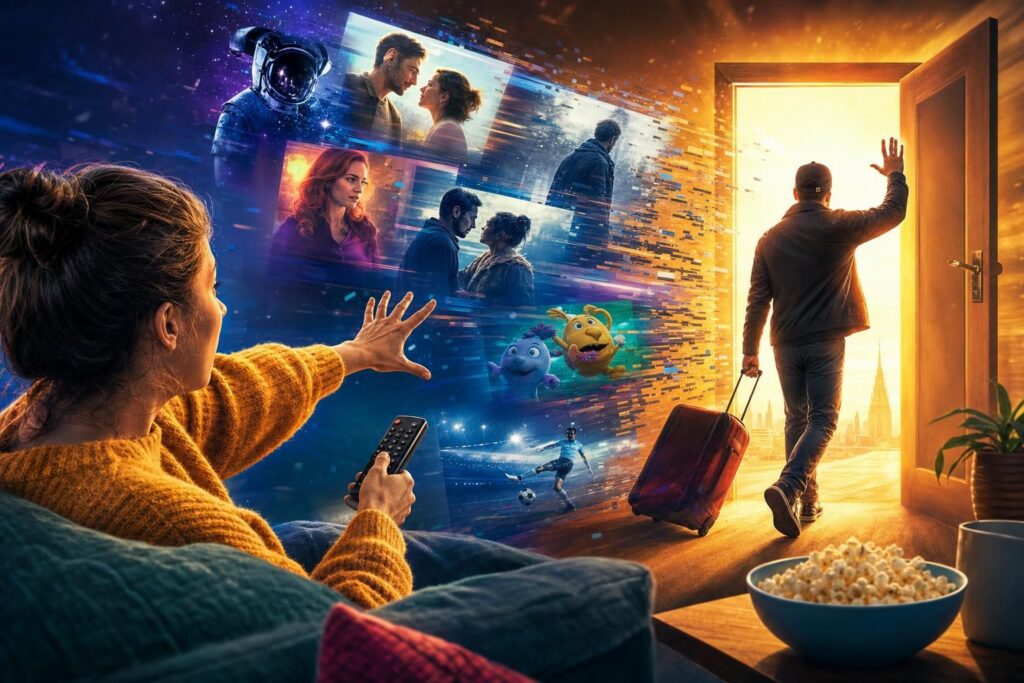
Shows usually leave when streaming rights expire; an “original” is no guarantee of permanence, and UK availability needs checking separately.
You finally decide to watch the series everyone recommended six months ago. You find the message recommending it, open the streaming app and discover that the show has vanished. Apparently, your viewing schedule was meant to be negotiated by a television lawyer.
Usually, a show disappears because the service’s right to stream it has expired. That right may cover certain countries, last for a limited period or apply to particular seasons. The service might renew the deal, another distributor might secure the rights, or the title might not turn up on a subscription service straight away. To understand what has happened, separate three things that streaming apps make look deceptively similar: licensing, ownership and distribution.
Why does a licensed show leave?
A streaming catalogue is less like a bookshelf you own than a collection of rooms rented on different contracts. A service can offer a programme without owning it. It has permission to stream the title under agreed conditions, often including where and for how long it can be shown. When that permission ends, the programme must leave unless a new agreement is made.
Netflix explains its own removal decisions in terms of expiring licences. It considers whether rights are available to renew, how popular a title is in a region and what renewal would cost. Expiry creates the decision point; it does not automatically mean the service simply got bored of the show. Nor does every departure mean a rival has won a spectacular bidding war. Sometimes there is no confirmed subscription home immediately afterwards.
That distinction matters. The end of one platform’s licence tells you what that service can no longer offer, not necessarily what the rights-holder will do next. A title might move to another subscription service, become available to rent or buy, return to a broadcaster’s on-demand catalogue, or remain unavailable to stream in the UK for a time. The gap can be the answer, even if it is not a satisfying one.
The same programme can also have different arrangements in different countries. A US article saying a series has moved to a particular app is no guarantee that a viewer in Birmingham will find it there. Streaming rights are often negotiated by territory, so a title can leave one country’s catalogue while staying in another’s. The internet may speak one language about a show’s whereabouts; the contracts do not.
Does ‘original’ mean a show will stay forever?
No. “Original” tells you much less about permanent availability than the branding suggests. It can describe a programme commissioned for a platform or released under its banner, but the word alone does not tell you who owns every relevant right or how long the platform can distribute it. A show may involve an external production company and agreements covering different territories, formats or periods.
That is the difference between ownership and distribution. Ownership concerns who holds the underlying rights; distribution concerns who is allowed to make the programme available, and where. A service might have commissioned a show without owning every right outright, while a rights-holder may license a title to different services in different places or at different times.
So an “original” label is not a lifetime membership card. Rights can change, an exclusive period can end, or a platform may choose not to carry a title it has the ability to offer. That does not mean every original will disappear, or that every departure has the same explanation. A licensed programme leaving after its deal expires is different from a platform removing one of its own commissioned shows. Without a clear statement about a particular title, describe the change in availability rather than guessing at private contract terms.
Where does a show go after it leaves?
It may turn up on another subscription service, a rental or purchase storefront, a broadcaster’s catch-up service, or nowhere accessible in the UK for a while. A new distributor might offer it after an exclusive window ends; the rights-holder might also wait before agreeing another deal. Leaving one app is not the same as being permanently erased from television history, although it can feel that way when you were halfway through series three.
Big rights negotiations can make these movements especially untidy. Reporting on South Park’s changing streaming availability illustrates why a familiar series can be absent from one service while episodes remain accessible elsewhere. It is an example of how rights and distribution can produce a patchwork, not a reliable map of where a UK viewer will find the show next.
Also check what “available” means. Search results can put a paid rental beside something included in a subscription, with little to distinguish them until you reach the checkout. Check the price, the seasons and whether the listing is for the programme you actually want. A service carrying series one does not establish that it has the rest, and a listing is not useful if it covers a different version or special.
How to find a show’s next legitimate UK home
Start with the full title and “UK”, then confirm the result on the service’s own website or app. Check the year and version: remakes, films, specials and similarly named programmes can make a quick search surprisingly unhelpful. If you are after a particular season or episode, verify that it is there before signing up for another subscription.
A UK streaming-availability tracker can narrow the hunt, but treat it as a signpost rather than the final answer. Listings may lag behind catalogue changes, and some combine subscription viewing with rental or purchase. Open the destination service and confirm that the title plays in the UK under the terms you expect. If you already pay for a television package, check its on-demand catalogue as well as standalone streaming apps.
If the title is not listed, look for an announcement from the broadcaster, platform or rights-holder before trusting a social post about a supposed move. An announcement may confirm a future home without giving an immediate viewing date, and a deal announced for another country may not apply here. If no UK deal has been announced, there may simply be no honest answer to “where next?” yet. A reminder to check again beats paying for a service on the strength of a rumour.
Rental and purchase are worth checking separately from subscriptions. A digital storefront may offer a title to rent or buy even when no subscription service carries it, but check the terms before paying: access through a storefront is not the same as owning an unrestricted video file. Physical media may also be an option for a show you want to revisit, if a release exists. None of these routes guarantees that every season or edition is available, so check the specific listing.
The rule your watchlist cannot tell you
A streaming app shows what it can offer now, not what it has promised to keep. Licensing determines the permission, ownership affects who can grant it, and distribution determines where the programme turns up. Keeping those separate will not stop your favourite series disappearing, but it will help you understand why and search sensibly for its next legitimate home.