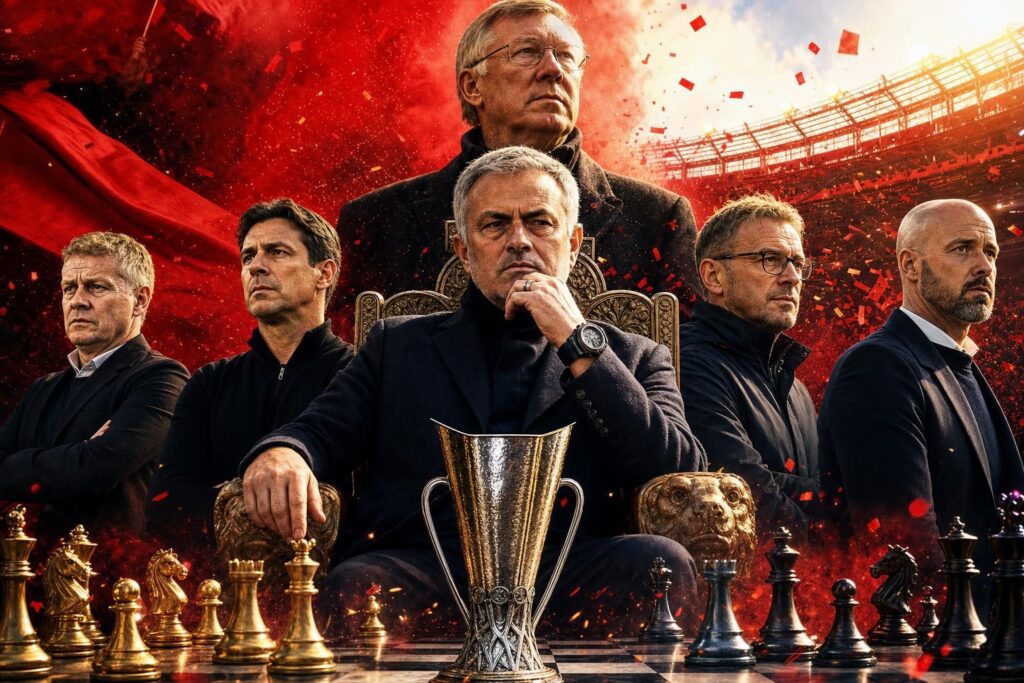
Mourinho ranks first for silverware, but United’s post-Ferguson managers must also be judged by their football, circumstances and lasting impact.
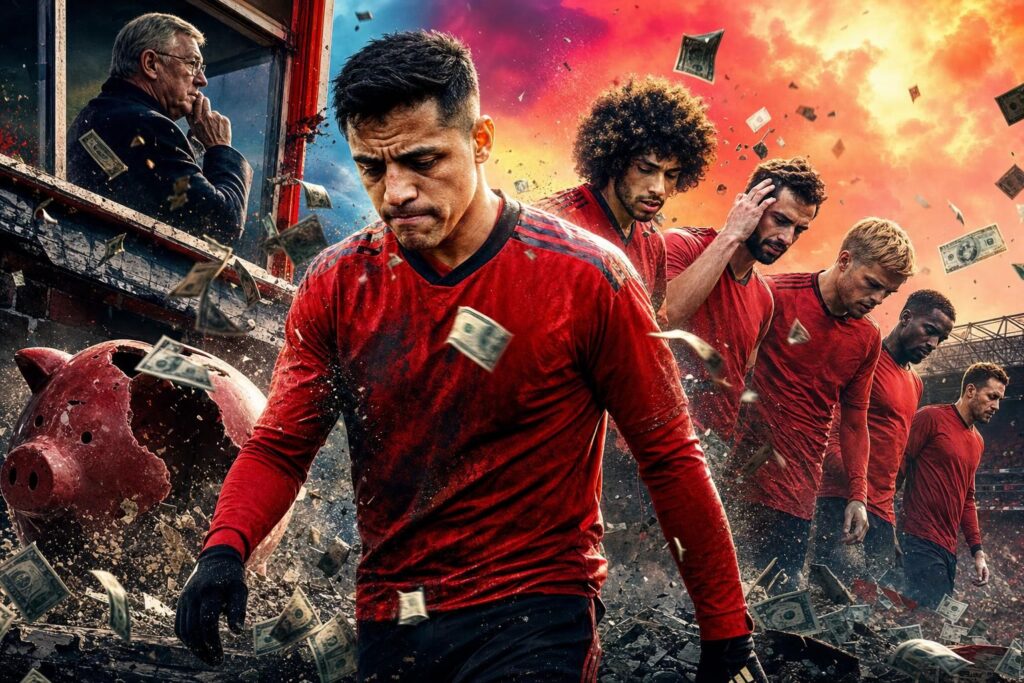
Sir Alex Ferguson left Manchester United with a league title and an impossible job description. His successors were expected to keep winning while rebuilding the machine that had made winning look routine. Some collected trophies, some improved the football, some left the next manager a problem wrapped in an expensive contract.
This ranking covers the managerial spells from David Moyes’s appointment in 2013 through Erik ten Hag’s 2024 FA Cup victory. It weighs results and major trophies most heavily, then considers football, inherited circumstances and what remained after each departure. The Community Shield counts as an honour, but not as a major trophy. Ryan Giggs and Michael Carrick are included because they took charge, though caretaker spells cannot fairly be measured like full seasons.
1. José Mourinho: the silverware wins the argument
Mourinho’s United could be laborious, combustible and occasionally both before half-time. Yet he won the League Cup and Europa League in 2016-17, giving the club a European trophy and a tangible answer to the question every new United manager faces. He also won the Community Shield in 2016, a useful honour rather than a trump card.
He did not inherit Ferguson’s champions. He took charge of a club already several years into its search for a replacement identity. Mourinho’s solution was pragmatic rather than particularly durable: the trophies remained, while the football offered little obvious blueprint for whoever followed. He ranks first because achievements have to count for more than aesthetic objections. United supporters did not spend those years longing for a handsomely constructed spreadsheet.
The case against him is that the club emerged without a settled style or a sturdy foundation for the next appointment. That matters, but it cannot erase a European title and a domestic cup. Among this group, Mourinho delivered the strongest combination of major honours.
2. Erik ten Hag: two cups, one unresolved blueprint
Ten Hag’s first two seasons brought the 2023 Carabao Cup and, more memorably, victory over Manchester City in the 2024 FA Cup final. He also restored Champions League qualification early in his spell. Those are substantial achievements in an era when simply declaring that United ought to win things had begun to sound like a man shouting at a locked door.
The difficulty is separating those excellent occasions from the wider question of what he built. United could look organised in a decisive cup match without making their underlying approach seem settled. His inheritance was difficult, and beating City for the FA Cup deserves more than a footnote, but two trophies alone cannot establish a lasting identity.
Ten Hag comes close to Mourinho on honours. Mourinho takes the higher place because his haul included a European trophy as well as a domestic cup. The FA Cup final win remains one of the period’s defining moments, not evidence by itself that the longer-term project had clicked into place.
3. Louis van Gaal: an FA Cup and an argument about style
Van Gaal arrived after Moyes’s abrupt exit, with United needing something more convincing than a promise that the Ferguson years might resume shortly. He brought a clear idea of control and won the 2016 FA Cup. That trophy matters, particularly in a period of transition, and gives his spell a concrete achievement that cannot be waved away as merely a respectable attempt.
Unfortunately, control of possession did not always translate into control of the audience’s eyelids. His United could be painfully cautious, and he was dismissed in May 2016. A discernible method and a major trophy put him above managers whose more enjoyable moments never yielded silverware. His lasting contribution was not a permanent tactical template, but proof that the job required more than invoking the old one.
4. Ole Gunnar Solskjær: the best mood, the missing trophy
Solskjær took over as interim manager in December 2018 and later became the permanent manager. After Mourinho’s departure, he brought a welcome change of atmosphere and a side capable of playing lively attacking football. There were stretches when watching United felt less like a test of supporter endurance.
He also had time to build, which makes the absence of a major trophy impossible to wave away. A better mood is valuable; it is not a substitute for a winning structure that survives scrutiny when results turn. Solskjær left in November 2021. He ranks below Van Gaal because this list is about what managers delivered and left behind, not just how much more pleasant it was to turn up.
5. David Moyes: Ferguson’s successor, not his continuation
Moyes was announced as United manager in May 2013 and dismissed the following April. He inherited the reigning champions, an obvious advantage on paper and a ferocious burden in practice. That squad had won under a manager with decades of authority and an unusual capacity to keep a team competitive while changing its parts.
United’s decline under Moyes was too stark to explain away as an unfair assignment. But the appointment also sat inside a wider institutional problem: the club needed to replace a manager whose authority and methods could not simply be handed over with the keys to the training ground. Moyes built no lasting solution and won no major trophy. He sits above Rangnick because he had a full-scale attempt at the job, not a temporary mandate to steady it.
The wider question of United’s tactical direction after Ferguson is explored in our look at the club’s lost tactical identity. Moyes’s short reign was an early, painful sign that replacing Ferguson meant more than appointing another manager and hoping the old machinery kept running.
6. Ralf Rangnick: the reset that never became a team
Rangnick arrived as interim manager in December 2021, following Solskjær’s departure and Carrick’s brief spell in charge. The idea of appointing a coach associated with a clear football philosophy made sense for a club desperate for direction. Ideas, though, require buy-in, suitable players and time; an interim appointment is not the easiest place to find all three.
His spell did not produce an on-pitch transformation that might lift him above Moyes. Nor should an interim manager be credited with rebuilding a club simply because the need for rebuilding became painfully obvious on his watch. Identifying a problem and solving it are separate managerial achievements. Rangnick’s contribution here is mostly instructive: a diagnosis is not the same thing as a cure.
7. Michael Carrick: a caretaker, not a failed architect
Carrick briefly took charge in November 2021 between Solskjær and Rangnick. That timing matters more than any grand theory about his legacy. He was there to guide United through a handover, not to create a footballing identity that would define the next decade.
He edges Giggs because his assignment came amid an immediate change of regime, but the gap between them is not a meaningful verdict on managerial ability. Neither caretaker had the time to shape recruitment, establish a durable style or leave a completed project. Seventh is not an insult; it is an admission that caretaker work belongs in the history without being mistaken for a building project.
8. Ryan Giggs: four games cannot carry a legacy
Giggs took charge for the final four league games of 2013-14 after Moyes was sacked. For United supporters, the sight of a Ferguson-era figure in the dugout had an obvious emotional pull. Emotion, however, is precisely what this ranking is trying not to mistake for construction.
Four games gave Giggs almost no opportunity to shape recruitment, establish a playing style or leave a sustainable team. Placing him last says very little about his ability and a great deal about the limits of the assignment. His caretaker spell belongs in the timeline, but it cannot be weighed against several seasons of results and decisions.
What the post-Ferguson rankings really measure
Mourinho comes out on top, though hardly as the model for everything United should want from a manager. Ten Hag’s cup wins and Van Gaal’s FA Cup show that silverware was possible; Solskjær’s spell shows that a more enjoyable mood did not automatically become a trophy-winning structure. The managers inherited different circumstances, but none could make United’s central problem disappear: the club needed both a successful team and a clear direction.
That tension runs through the wider story of United’s post-Ferguson transfer decisions, too. Trophies are real, good football matters, and neither guarantees that the next manager inherits a functioning club. Ferguson made those demands coexist. His successors have mostly been asked to choose which one they could satisfy first.